
Peptide Applications in Science: From Research to Innovation
Introduction
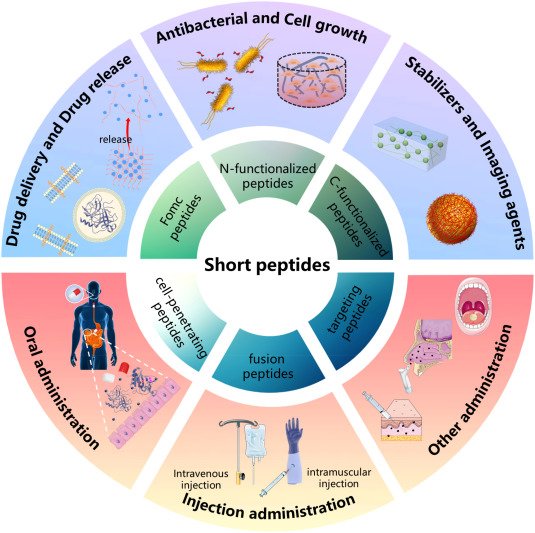
Peptides have become indispensable tools in modern science. Their versatility allows researchers to explore complex biological systems, design new materials, and develop innovative formulations.
🧬 Why Peptides Are So Widely Used
- tunable sequences
- high specificity
- compatibility with multiple research environments
🔬 1. Biochemical and Molecular Research
Peptides help researchers:
- map protein–protein interactions
- study enzyme binding sites
- design assays
🧪 2. Cellular and Signaling Studies
Used to:
- investigate receptor interactions
- analyze signaling pathways
- study cellular responses
🧱 3. Materials Science & Nanotechnology
Peptides can:
- self-assemble into nanostructures
- form hydrogels
- act as scaffolds for biomaterials
🧴 4. Cosmetic & Formulation Research
Peptides are explored in:
- formulation stability
- texture and delivery systems
- ingredient interaction studies
🧠 5. Computational & Theoretical Research
- modeling peptide folding
- simulating interactions
- AI-driven sequence design
⚙️ 6. Analytical and Diagnostic Tools
- assay standards
- calibration controls
- biomarker research
📊 Summary Table
| Field | Application |
|---|---|
| Biochemistry | Interaction studies |
| Cell Biology | Signaling research |
| Materials | Nanostructures |
| Formulation | Ingredient studies |
| Analytics | Assay development |
🔍 Benefits Across Applications
- precision
- reproducibility
- scalability
⚠️ Considerations
- stability management
- proper storage
- sequence optimization
📈 Emerging Application Areas
- smart biomaterials
- targeted delivery systems
- hybrid peptide-polymer systems
❓ FAQs
Why are peptides used instead of proteins?
They are easier to design and control.
Are peptides used outside biology?
Yes, including materials science and engineering.
 Peptide Applications in Science Peptide Applications in Science Peptide Applications in Science